The Aesthetic of the Left-Hander
There is a widely accepted, almost unwritten law in the game of cricket: left-handed batters just look better. Whether it's Brian Lara's extravagant high backlift, Yuvraj Singh's effortless flick over mid-wicket, or Saeed Anwar's punch off the back foot. There is a fluidity and grace inherent to southpaws that right-handers, despite their efficiency, rarely manage to replicate.
In modern world cricket today, across both the men's and women's games, few players embody this aesthetic perfection as flawlessly as Smriti Mandhana.
When Smriti is at the crease, batting ceases to be a violent battle between bat and ball. It becomes an exhibition. While modern T20 cricket has increasingly become obsessed with brute force, thick bats, and 100-meter sixes, Mandhana offers a refreshing reminder of the game's classical roots. She doesn't hit the ball; she strokes it. She doesn't conquer the bowler; she simply redirects their energy to the boundary rope.
The Anatomy of the Cover Drive
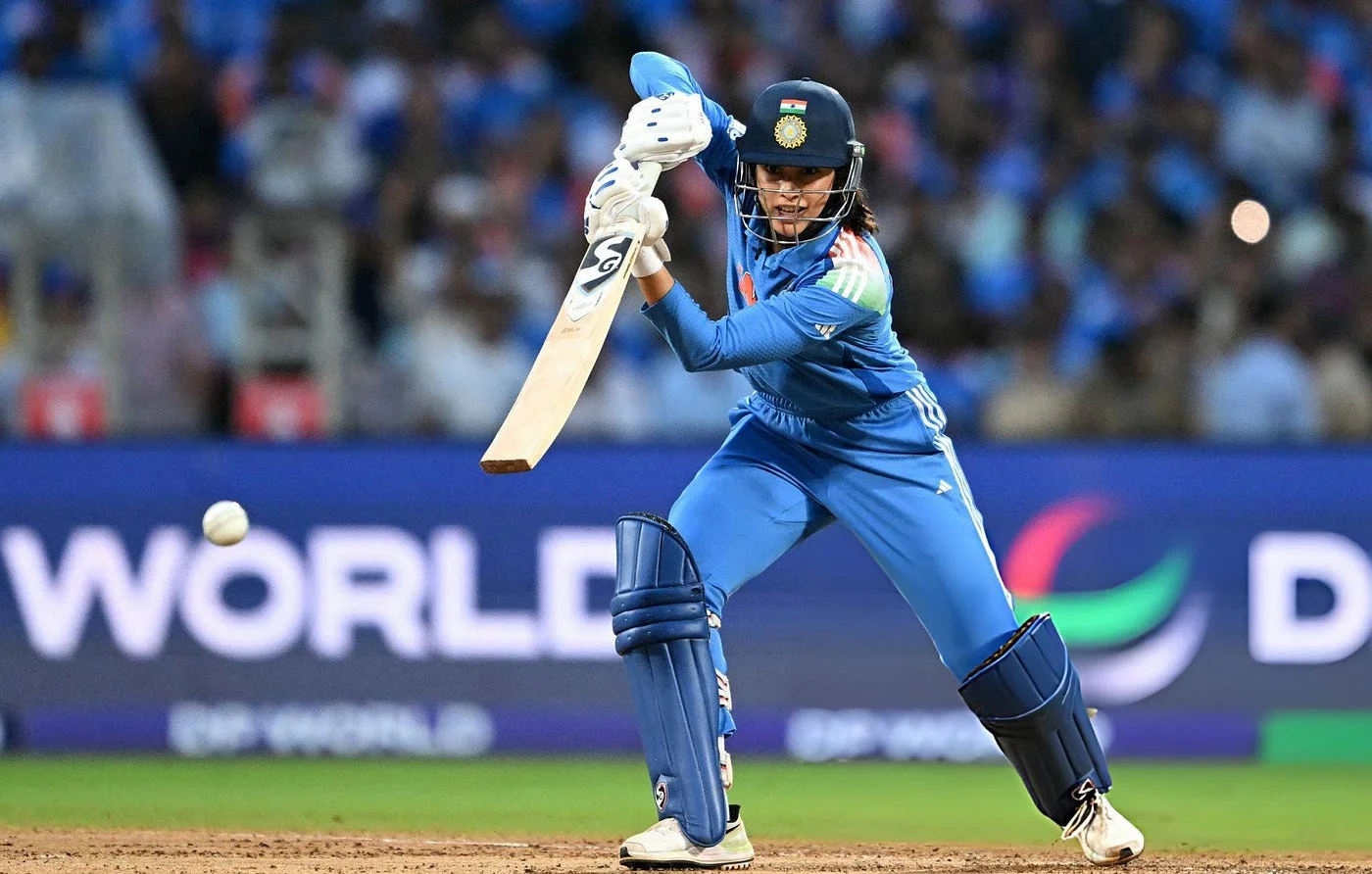
If you were to create a textbook manual on how to play the cover drive, you would just use a slow-motion video of Smriti Mandhana.
The magic starts before the ball even reaches her. Her head remains incredibly still, acting as the perfect anchor for her body. As the bowler delivers, she takes a measured stride forward. Unlike many modern batters who lunge heavily, throwing their weight off-balance, her stride is calculated. The front knee bends just enough to get her eyes directly over the line of the ball.
Then comes the downswing. The bat comes down from a high, classical backlift. The front elbow points proudly to the sky, the hallmark of batting royalty. But what makes her drive truly spectacular is the follow-through. Once the ball is struck, she holds the pose for a fraction of a second longer than necessary. It is pure theater. The ball races to the boundary, dissecting fielders who are left standing like mere spectators at an art gallery.
The Ganguly and Sangakkara Comparisons
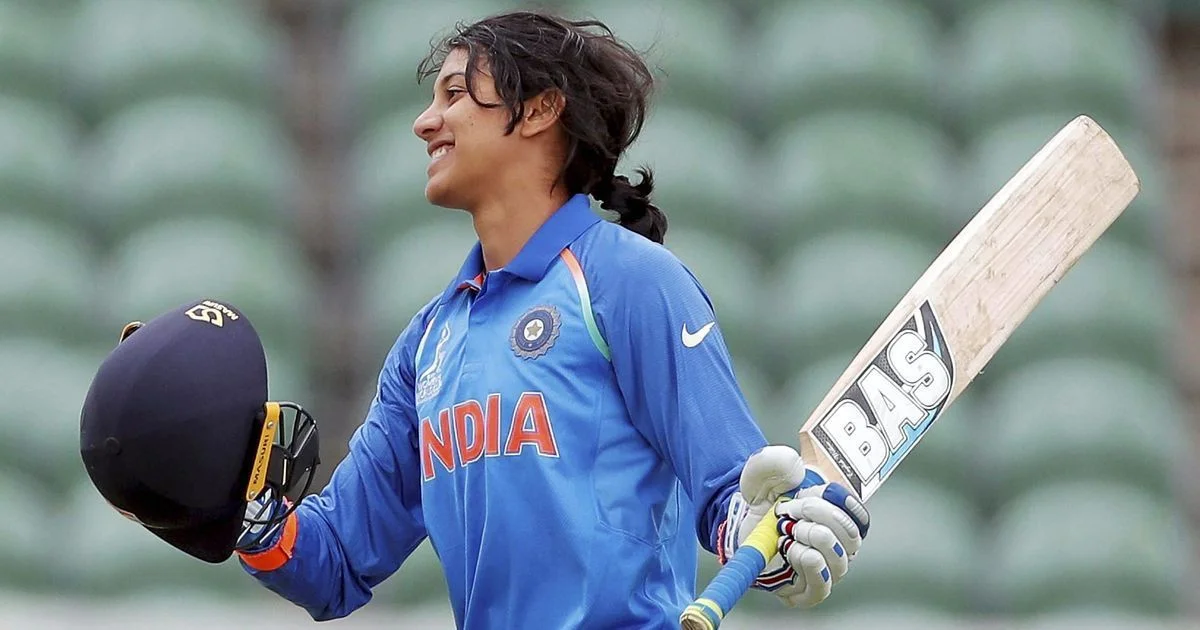
In India, you know you have made it when you are compared to the legends of the 1990s and 2000s. Early in her career, cricket pundits couldn't help but notice the striking resemblance between her off-side play and that of former Indian captain Sourav Ganguly.
Like Ganguly, Mandhana possesses an unnatural ability to pierce the tightest of off-side fields. You can place four fielders inside the circle between point and mid-off, and she will still find the one-foot gap between them. Her back-foot punch through point has the same dismissive arrogance that Ganguly famously possessed.
Internationally, her poised stance and elegant flicks off the pads draw heavy comparisons to Kumar Sangakkara. Both share a serene calmness at the crease. When Mandhana is batting well, she doesn't seem hurried. Fast bowlers operating at 120+ kmph seem to bowl in slow motion to her. This illusion of "extra time" is the ultimate sign of a generational batting talent.
The Right-Handed Secret Behind Her Left-Handed Genius
One of the most fascinating aspects of Smriti Mandhana's batting is a secret that many casual fans don't know: She is naturally right-handed.
Yes, the most elegant left-handed batter in the world writes, eats, and throws with her right hand. Growing up in Sangli, Maharashtra, her older brother Shravan played cricket at the district level. Young Smriti idolized him. When she picked up a bat, she simply copied his stance. Shravan was a left-hander, so Smriti became a left-hander.
This accidental decision actually provided her with a massive biomechanical advantage. Because her right arm is her dominant arm, and it serves as the top hand on the bat handle, she has immense control over her strokes. The top hand in cricket dictates the direction, timing, and finesse of the shot, while the bottom hand provides the power. By having her dominant hand at the top, her game naturally evolved to prioritize timing and placement over sheer power. It is the exact same anatomical quirk that made players like Brian Lara and Sachin Tendulkar (a natural left-hander who batted right-handed) so incredibly special.
Changing the Face of Women's Cricket in India
Mandhana's impact goes far beyond her cover drives and boundary counts. Along with Mithali Raj, Jhulan Goswami, and Harmanpreet Kaur, she has fundamentally changed how women's cricket is consumed in India.
During the 2017 Women's World Cup, where India miraculously reached the finals, Mandhana became a national sensation. Her scintillating century against the West Indies in that tournament didn't just win India the match; it woke up a billion sleeping fans. Suddenly, boys in the streets weren't just mimicking Virat Kohli's MRF bat; they were trying to copy Mandhana's high-elbow drive.
She brought "star power" to the Indian women's team. Her face was on billboards, her interviews were trending on YouTube, and her jersey was selling out. She proved that women's cricket in India didn't just have to rely on patriotism for viewership; it could rely on pure, unadulterated sporting brilliance.
The Captaincy Evolution: Ending the RCB Drought
For a long time, the only criticism leveled against Mandhana was her inconsistency and her ability to handle extreme pressure situations. She was viewed as a phenomenal player, but perhaps not a ruthless leader.
That narrative was permanently destroyed in March 2024. As the captain of the Royal Challengers Bangalore (RCB) in the Women's Premier League (WPL), she carried the weight of one of the most passionate and success-starved fan bases in world cricket. RCB's men's team, despite featuring legends like Kohli, AB de Villiers, and Chris Gayle, had famously never won an IPL title in 16 years.
Smriti Mandhana did it in her second attempt.
Her captaincy throughout the tournament was a masterclass in calm, composed leadership. She backed her spinners, set aggressive fields, and most importantly, led from the front with the bat in crunch situations. When she lifted the WPL trophy in front of a deafening crowd, she didn't just win a tournament. She immortalized herself in the folklore of Indian franchise cricket.
Smriti Mandhana is no longer just "the girl with the beautiful cover drive." She is a World Cup finalist, a franchise-winning captain, an icon for millions of young girls, and undeniably, the most elegant batter walking the planet today.
Frequently Asked Questions
When did Smriti Mandhana make her international debut?
Smriti Mandhana made her international debut for India in April 2013 against Bangladesh. She was just 16 years old at the time, showcasing her prodigal talent early on.
Why is her cover drive considered the best in women's cricket?
Her cover drive is highly praised because of her impeccable weight transfer, high front elbow, and the fact that she relies entirely on timing and placement rather than brute force. It is technically and aesthetically flawless.
Did Smriti Mandhana lead RCB to a WPL title?
Yes, under Smriti Mandhana's captaincy, Royal Challengers Bangalore (RCB) won the Women's Premier League (WPL) title in 2024, ending a notorious, long-standing trophy drought for the entire RCB franchise.
Which male cricketers is she most often compared to?
Because of her elegant left-handed stroke play through the off-side, she is frequently compared to former Indian captain Sourav Ganguly and Sri Lankan batting legend Kumar Sangakkara.
Where is Smriti Mandhana originally from?
She was born in Mumbai but raised in Sangli, Maharashtra. Both her father and brother were former district-level cricket players who deeply shaped her early cricketing journey and development.
Is Smriti Mandhana naturally left-handed?
Interestingly, no. Smriti is naturally right-handed for writing and throwing. She learned to bat left-handed because she used to idolize and copy the stance of her older brother, who was a left-handed batter. This gave her dominant right hand control over the top handle of the bat, aiding her precision.